Condensation and mould.
Condensation happens when warm, moist air inside meets a cold surface and turns back into water. It's the most common kind of damp in UK homes, and it shows as black mould in cold spots: around windows, in the corners of outside walls and behind furniture. It's usually a ventilation and cold-surface problem rather than a leak.
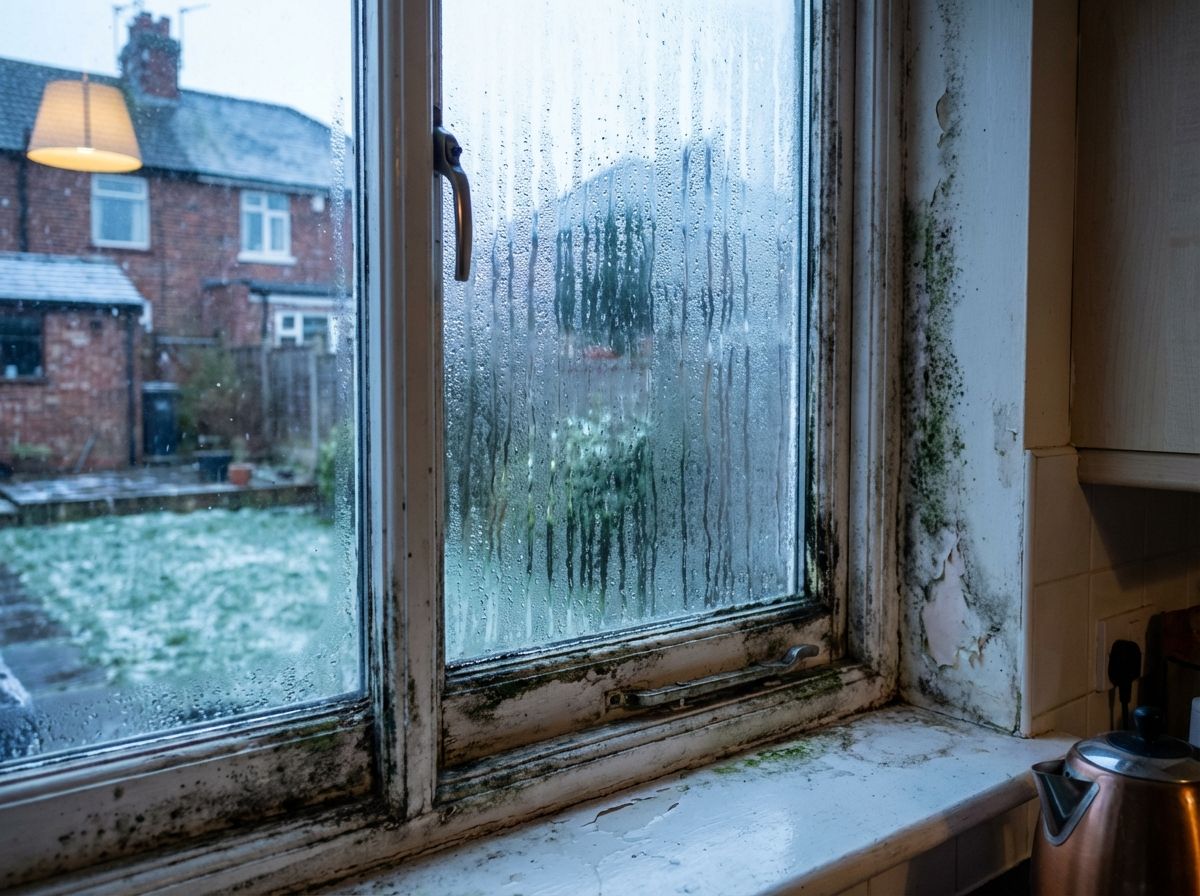
Signs to look for
- Black, spotty mould around windows and in the corners of outside walls
- Water running down the inside of windows in the morning
- Mould behind wardrobes and sofas that stand against outside walls
- A musty smell, strongest in bedrooms after a night with the windows shut
- Damp that is much worse from October to March
Why it comes back after you clean it
Cleaning mould removes the growth but not the conditions. Mould can grow wherever the air at a surface stays above about 80 per cent humidity, which happens long before you see any water. Unless the surface gets warmer or the air gets drier, it's back within weeks.
Breathing, cooking, washing and drying clothes all put water into the air. Drying one load of washing indoors releases around two litres. That water has to leave the house somehow, and a well-sealed modern home often gives it no way out.
That's why being told to open the windows is so frustrating. It works, but it costs heat, and in a flat with no through draught it may not work at all.
Cold spots
Mould turns up in the same places in most homes because those places are colder. An outside corner has more wall facing outside than inside, so it loses heat faster. Concrete lintels, steel beams and uninsulated window reveals do the same.
Insulating some walls but not others can make it worse. The walls left bare become the coldest surfaces in the room and collect all the condensation. It's a common side effect of doing only part of a house.
Thermal imaging shows this directly. It picks out the surfaces cold enough for condensation, which turns an argument about how you live into something you can measure.
What actually fixes it
The answer is usually steady, low-level ventilation rather than the odd burst. A positive input ventilation unit draws filtered air in from the loft at a low rate and gently pushes moist air out through the gaps in the house. It uses a few watts and runs on its own, which matters, because anything that relies on someone remembering to switch it on gets forgotten.
If the problem is mostly in one room, an extractor fan in the bathroom or kitchen that runs all the time and speeds up when the air gets humid is often enough. Trickle vents in the window frames, if you have them and keep them open, handle the rest.
Alongside the ventilation, we treat the affected surfaces with a fungicidal wash and, where a cold spot is the root cause, insulate it. Anti-mould paint is a finishing touch, not a fix.
If you rent from a council or housing association, this matters legally too. Awaab's Law has applied to social landlords in England since 27 October 2025. They must investigate significant damp and mould hazards within 10 working days, and carry out work to make the home safe within 5 working days of that investigation. From 30 November 2026 it covers a wider range of hazards. It doesn't yet apply to private renting.
Common questions
Is black mould dangerous?
It can affect health, particularly for people with asthma, allergies or a weakened immune system. Where it's severe, the Housing Health and Safety Rating System treats damp and mould as a Category 1 hazard, the most serious kind. If anyone in the house has breathing problems, treat it as urgent and speak to your GP as well as to us.
Is it my fault for drying washing indoors?
Not really. Drying washing indoors adds moisture, but a house should cope with normal living. If it can't handle a load of washing without growing mould, the ventilation isn't good enough. We're not here to blame how you live.
Will a dehumidifier solve it?
It helps in the short term, especially while a house dries out. But it costs more to run than continuous ventilation and does nothing about cold surfaces, so it's a stopgap rather than a fix.