Penetrating damp.
Penetrating damp is water getting in from outside, through a wall, roof, chimney or window, rather than rising from the ground. It shows as patches that darken during and after rain, can appear at any height including upstairs, and traces back to a fault outside, such as failed pointing, cracked render, a blocked gutter or a bridged cavity.
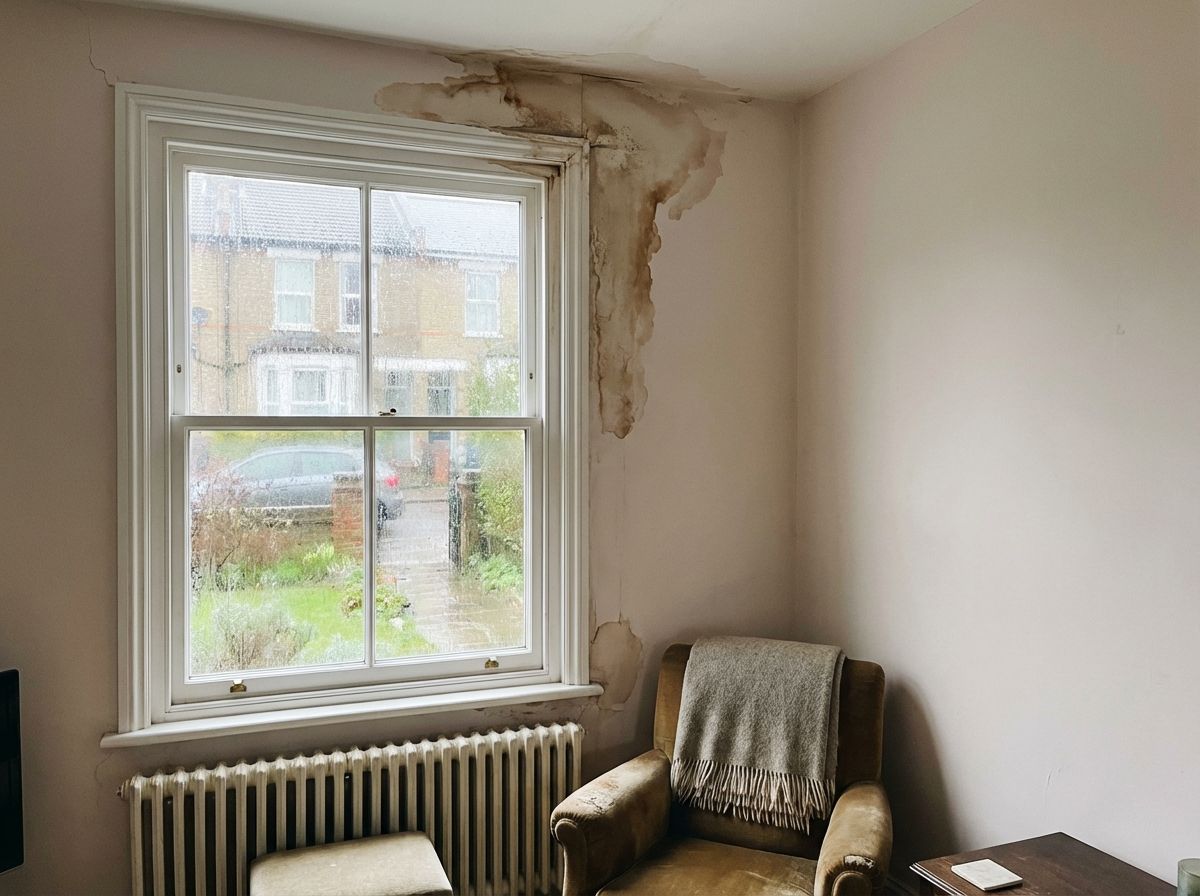
Signs to look for
- Damp patches that darken in heavy rain, then partly dry out
- Staining on an upstairs wall or ceiling, which rules out rising damp
- Patches on the south-west side of the house, which takes the worst of the Sussex weather
- Render that sounds hollow when tapped, often with a crack running through it
- Water marks below a window sill or around a chimney breast
Finding where it gets in
Water rarely shows up where it gets in. It runs down a cavity, along a joist or across a lintel before it reaches the plaster, which is why guesswork leads to repairs that don't work. The stain inside is the end of the journey, not the start.
Thermal imaging during or just after rain is the quickest way to follow the path, because wet brick shows up at a different temperature to dry brick. If the picture still isn't clear, we can wet one section of wall at a time with a hose to see which part lets water in.
The usual culprits in Sussex
Failed pointing is one of the most common. Victorian and Edwardian brickwork was laid in lime mortar. Where it's been repointed in hard cement, the new mortar cracks away from the softer brick and opens a path for water. The fix is to rake it out and repoint in lime, not to seal over the top.
On rendered and pebbledashed houses, which are common along the coast, cracked or loose render is the usual route. A hairline crack lets water in that then can't get out, so the render holds it against the wall and the damage spreads behind a surface that looks fine.
Gutters and downpipes cause a surprising amount. A blocked gutter, a split downpipe or a drain backing up will soak the same patch of wall every time it rains. It's the cheapest fault to fix and the one most often missed, because nobody looks at their gutters in the weather that shows the problem.
In cavity walls, mortar dropped during building can sit on a wall tie (the metal ties that hold the two layers of brick together) and carry water across the gap to the inside wall. It makes a small, sharp-edged patch that never quite dries.
Fixing it properly
We fix the fault rather than covering up the symptom. That means repointing in the right mortar, cutting out and replacing failed render, clearing or replacing gutters and downpipes, or clearing a bridged cavity. If a wall has been wet for a long time, the plaster may need replacing once the wall has dried.
We usually advise against water-repellent coatings on solid walls. They slow down how fast the wall can dry, and if water still gets in somewhere else, the coating keeps it in.
Common questions
Why does the damp patch appear days after it rains?
Water takes time to soak through brick and stone. On a solid wall, the gap between the rain and a patch showing inside is often 24 to 72 hours, which is why people miss the connection. Noting when the patches darken helps us find the source.
Will insurance cover it?
Buildings insurance usually covers sudden water damage, such as a burst pipe, but not gradual damage from wear and tear, such as failed pointing. A written report on the cause helps if it turns out to be something your policy covers.
Can penetrating damp cause mould?
Yes. Any surface that stays wet can grow mould. But mould on cold outside corners, with no leak to explain it, is more often condensation. The two often happen together and need different fixes, so it's worth knowing which you have.